Wednesday, 17 October 2012

Reading Quran and reflecting over the Quran Is our Duty.


Read quran and it will guide us to the true teaching of the Prophet Muhammad (Peace be upon him) he summarized the religion of Islam with this statement:
“The Religion is naseehah (sincerity)!” So then Tameem ibn Aws, may Allah be pleased with him, then said, “We asked, ‘To whom?’” He said: “To Allah, HIS BOOK holy quran, His Messenger, the leaders of the people, and their common folk.” [Muslim] so to study the religion people should go to the source of and source of Islam is the quran so learning quran and reading quran with the meaning the quran tafsir and then explore the words of wisdom. And for the Muslims the sincerity that is due to the Book of Allah includes doing the quran recitation, listening to quran along with learning the tajweed rules and reciting it beautifully, letting our kids learn quran learning holy quran tafseer and the reasons for its revelation, affirming that it is the Truth, the perfect Speech of Allah and not part of the creation, honoring it and defending it, abiding by the orders and prohibitions found in it and teaching quran to spread the word or truth and calling to it. So by learning quran education online and reflecting over the Quran online, one fulfills an obligation and is rewarded for that. Upon fulfilling this obligation, the Quran then becomes a proof for him on the Day of Judgment! And that is our second benefit we will take by embracing this Noble Book.

Read quran its is the Word of Allah the sign of guidance.


Reading quran and exploring it is the true duty of a Muslim because it contains Allah’s message to all people and the quran teaching tells the people that how to act correctly. By learning quran you will find that it guides us to a correct way of life in this world. We as a practicing Muslim should teach our kids quran and let the kids learn quran recitation and do quran memorization and we also do quran memorization by heart and there is another importing things that learn quran with tajweed because the tajweed rules are very important regarding the pronunciation and way or read the holy quran and further more enhancing the quranic studies by learning quran tafseer and reading quran the translation with it listening to quran online with the quran recitation don by some of the top reciter also. It is the Book of Allah also talks about life after death. It tells us that Allah has prepared Paradise for good people and Hell for bad people. While reading Quran we see that it encourages the worship of only one God Who creates and provides for them. The Book forbids people from evil and condemns those who do wrong. It contains stories of the past Prophets and the examples of bad and good people. Find the online quran courses.

Learn Holy Quran because it will be a proof for us muslim on the Day of Judgment.


This is due to the statement of the Messenger: “And the Quran is a proof for you or against you.” [Muslim] so the duty of every Muslim is to read quran and learn quran with tajweed so one of two things will occur with this proof, the Book of Allah. And this quran education will be in your favor, a proof for us on the Day when we will need every single good deed and learning quran along with doing quran memorization is one of it and to add more spread the quran teaching and spread the kids quran knowledge and listening to quran online and understand the quran tafseer , it will be something standing against us and follow the guidance of or Prophet Muhammad (peace be upon him), and these good deeds will be a proof against us! Who could be saved from the terrors of that Day if Allah’s own Speech is against him?!?! Think carefully, so reading Arabic Quran and teaching our kids quran qaida with the tafseer of quran and let the kids memorize quran dear Muslim brother or sister, about your position with the reading Quran! Are you neglecting it, contradicting it, being heedless of its orders and prohibitions, are you thinking deeply over it?! Will it be on your side on the Day of Judgment.? So learn quran recitation! O Allah! We ask you, by Your Glorious Speech and the rest of your beautiful Names and Attributes, to make the Quran a proof for us! So the Quran tutor should let his student know about these facts also.

Important note to learn and Read Quran online


The Holy Quran is the word of Allah; it has been sent down to guide us and the guidance can online be gained through reading quran online. No other book can be like holy quran. As you come to the learn tajweed quran, Allah speaks to you and reading Arabic Quran is to hear Him, even to converse with Him, and to walk in His ways. So it is must for us as a Muslim to learn and do quran memorization by heart and the Quran tutor should teach the kids from quran qaida and then teaching quran online along with the quran tafseer and let the kids memorize quran so that we as Muslim could learn quran tajweed rules and then understand the quran tafseer  It is the encounter of life with the Life-giver. 'God - there is no god but He, the Ever-living, the Self-subsisting (by whom all subsist)  He has sent down upon you the Book with the Truth ... as a guidance unto mankind ...' (Al 'Imran 3: 2-3 learn quran recitation). So we should always remember the guidance of Allah and we should be listening to quran online along with obeying the commandments of Allah so let us join hands to learn the Koran and let our kids do quran memorization and learn the teaching of quran education online and apply them in there life there is kids quran lesson available online as well.

Wednesday, 8 August 2012

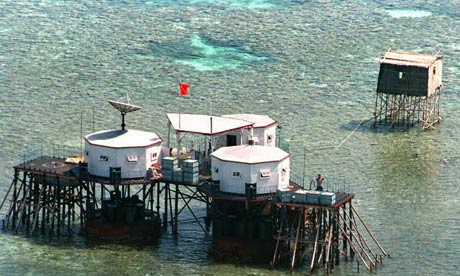
China lambasts US over South China Sea row

China Asia sea dispute


South China Sea row intensifies as China expands territorial claims in regions such as Spratley Islands. Photograph: Romeo Gacad/AFP/Getty Images

China's state-run media has lambasted the United States over its intervention in the South China Sea row, highlighting the alarming escalation of a long-running dispute.
Furious commentaries ordered Washington to "shut up" and accused it of "fanning the flames and provoking division" in the region. The foreign ministry in Beijing called in a senior US diplomat at the weekend over the State Department comments.
Analysts fear the South China Sea has become a major potential flashpoint, as tensions have risen sharply between China – which claims almost all the sea – and Vietnam and the Philippines. Brunei, Taiwan and Malaysia also lay claim to parts of the sea, which contains valuable energy reserves and fisheries and sees an estimated $5 trillion of cargo – half the world's shipping tonnage – pass through its sea lanes annually.
"While the likelihood of major conflict remains low, all of the trends are in the wrong direction, and prospects of resolution are diminishing," theInternational Crisis Group warned in a recent report on the six-party dispute.
Beijing's most recent moves include offering oil and gas exploration blocks for bidding and establishing a new city, Sansha, which boasts at most a few thousand residents and 5 square miles (13 square kilometres) of land spread over several tiny islands – yet lays claim to 772,000 square miles (2 million square kilometres) of sea and its own military garrison.
It prompted the US to publicly reenter the row, with a statement expressing concern at the growing tensions and singling out Beijing's role. The city and garrison "run counter to collaborative diplomatic efforts to resolve differences and risk further escalating tensions in the region," said Patrick Ventrell, acting deputy spokesperson at the State Department.
Beijing responded by calling in the US deputy chief of mission and state media ran a spate of hostile pieces. "We are entirely entitled to shout at the United States, 'Shut up'. How can meddling by other countries be tolerated in matters that are within the scope of Chinese sovereignty?" asked a commentary in the overseas edition of the People's Daily, the official Communist party newspaper.
The domestic version accused Washington of "fanning the flames and provoking division" in the region.
State media say Beijing's moves are a response to the actions of Manila and Hanoi, such as a new law requiring all foreign ships passing through the disputed waters to notify Vietnamese authorities.
In Chinese eyes, it is – as deputy foreign minister Cui Tiankai recently described it – a "victim", not the instigator.
Though its far smaller neighbours bristle at such a description, the new ICG report notes: "China is not stoking tensions on its own. South East Asian claimants ... are now more forcefully defending their claims – and enlisting outside allies – with considerable energy."
Shading the row is concern about the Obama administration's refocusing of foreign policy in a "pivot to Asia". The US says it has no territorial ambitions in the Sea and no position on the competing claims to land features, but has a national interest in freedom of navigation and maintaining peace and stability.
But Chinese hawks warn of an attempt to encircle and contain China while others argue that, at a minimum, its rivals are exploiting the US shift.
A Xinhua commentary this weekend accused the US of double-dealing and urged Washington to show it was not seeking "to clip China's wings and shore up the United States' cracking pedestal in the Asia-Pacific".
In a speech quoted by the Global Times, Zhou Fangyin of the Chinese Academy of Social Sciences noted: "Countries with territorial disputes with China believe that the costs and risks of provoking China have largely dropped ... China's rapid rise may also make [them] realize that their chances of reaping and consolidating benefits by encroaching upon Chinese territories would be smaller in the future."
In any case, argues Rory Medcalf of Australia's Lowy Institute, "It has become academic to ask who started it ... What we see now is an action-reaction cycle."
The multitude of Chinese agencies involved has stoked tensions, the ICG has argued, with poor coordination and some actors seeing it as a way to increase their power and budget.
Increasing militarisation of the dispute makes it harder to resolve skirmishes, but could also raise the threshold for armed conflict, it noted.
"More immediate conflict risks lie in the growing number of law enforcement and paramilitary vessels playing an increasing role in disputed territories without a clear legal framework", it added.
Domestic nationalism in other claimant countries adds to the difficulties.
No one wants military conflict, not only because of the inevitable disruption of trade. The smaller countries would have to take on mighty China, while such a conflict "would undermine [Beijing's] peaceful rise thesis, cause irreparable damage to its image and foreign policy in Asia and push other countries far closer to the US.
Clearly none of that is in China's interests," said Ian Storey, of the Institute of South East Asian Studies in Singapore.
Yet should it come to an exchange of fire, even the US could feel compelled to become involved – with great reluctance – to defend its credibility as an ally not only to the Philippines but countries across Asia, argued Medcalf.
Analysts see little hope of resolving the dispute and say the best-case scenario is now the agreement of measures to handle clashes.
"I don't think any of the claimants have any good options. They have all painted themselves into a corner," said Storey.


Wade Michael Page named as temple gunman as FBI examines far-right links


The FBI is examining ties between white supremacist movements and a US army veteran who killed six people as they gathered at a Sikh place of worship in Wisconsin on Sunday.
The police identified the gunman as Wade Michael Page, 40, who served in a US army psychological operations unit before he was discharged in 1998 for a pattern of misconduct, including being drunk on duty.

President Barack Obama said on Monday that Americans need to do more "soul searching" to find ways to reduce violence in the wake of the shooting, which is being treated by the FBI as an act of "domestic terrorism".
Page was shot dead by a policeman after badly wounding another officer at the Sikh temple in Oak Creek.
The authorities said Page was the only gunman. An earlier "person of interest" who was said to have appeared at the scene has been identified and ruled out of the inquiry.
The Oak Creek police chief, John Edwards, said it is premature to ascribe a motive, but some in the Sikh community said they feared Page confused them for Muslims. Witnesses to the shooting described him as wearing a tattoo commemorating 9/11. Photographs also show him posing in front of a Nazi flag.
"Maybe he hated our community for the wrong reasons," Amrit Dhaliwal, a local doctor and member of the Oak Creek temple, told the Guardian. "He may have thought putting a turban on was something else. We want to know: why did it happen?"
In the days following the 9/11 attacks, there were four attacks on Sikhs in the Milwaukee area.
"It's pretty much a hate crime," Ven Boba Ri, one of the temple's committee members, told the Milwaukee Journal Sentinel. "It's sad – I don't know how to describe it. Sikhism is such a peaceful religion. We have suffered for generations, in India and even here."
The Southern Poverty Law Center, which monitors extremist groups, suggested the community might have been targeted by Page because of a broader prejudice as it described him as a "frustrated neo-Nazi who had been the leader of a racist white-power band" called End Apathy.
Witnesses said Page "did not speak – he just began shooting". Using a semi-automatic pistol, he fired shots in rapid succession. He was carrying several magazines of bullets. Some of the congregants hid in cupboards. Children cowered downstairs and several women barricaded themselves in the building's kitchen. The victims included an 84-year-old man and a 41-year-old woman. Four of the dead were found inside the temple and three outside.
Among the dead was the temple president, Satwant Kaleka, who arrived in the US in 1982 largely penniless and built a successful petrol-station business. His son, Amardeep, said Kaleka, 65, was shot twice after tackling Page and then hid in a room where he died.
Kaleka was a founder of the temple, which opened five years ago to accommodate the area's expanding Sikh community. "It was like a second home to him," said Amardeep Kaleka. "He was the kind of person who, if he got a call that a bulb was out at 2am he'd go over to change it."
Two custodians, or granthi, were also killed, including Parkash Singh, who recently brought his wife and children from India to live in Wisconsin. Another victim who was hit stumbled to a nearby house, where Jim Haase opened the door to find an elderly man covered in blood from a bullet wound. "He couldn't speak English but he was pointing at it [the wound]," Haase told the Milwaukee Journal Sentinal.
Haase, a former soldier, laid the man on his lawn and pressed a towel on the wound to stem the bleeding.
The four men killed were named as Bhai Seeta Singh, 41; Bhai Parkash Singh, 49; Bhai Ranjit Singh, 39; Subegh Singh, 84. The dead woman was identified as Parmjit Kaur Toor, 41.
Of the six victims, four were Indian nationals, the country's ambassador to the US, Nirupama Rao, was told by the FBI.
The police officer wounded by Page was named as Lieutenant Brian Murphy, 51. Murphy was ambushed by the shooter as he went to tend to a wounded person. He was shot eight or nine times at close range. Edmonds commended his heroism as it emerged that he urged colleagues to help others, despite being seriously injured himself.
Steve Saffidi, the mayor of Oak Creek, said that what he called the "heroic action of the police" prevented many more people being killed.
Kuldip Singh, president of US chapter of United Sikhs, an international non-profit organisation, who has spent the past day in Oak Creek, said there was to find and send trauma counselors, preferably Sikhs, who could speak to a community grappling with fear and insecurity. Singh said: "The wife of a victim was so shattered – she had seen her husband in a pool of blood and could not even speak. I met others who are too scared to say anything, too scared to go out of their homes. People in the community are asking, 'Why did this happen, why us?'"
Singh also named two people at the temple on Sunday morning, Punjab Singh and Santokh Singh, as being among those critically injured and receiving medical treatment. "Punjab Singh had arrived not very long ago from Amritsar, India. He would do the discourses at the gurudwara," Singh said.
Earlier in the day, US secretary of state Hillary Clinton spoke to India's external affairs minister S M Krishna and expressed her shock and sadness over the killings. The Indian embassy's spokesperson in Washington, Virender Paul, told the Guardian that officials from the Indian consulate in Chicago had visited the community, were working with US authorities, and would extend consular assistance to the affected families.